


Mill town’s struggle reveals rural areas’ unique immigration challenges
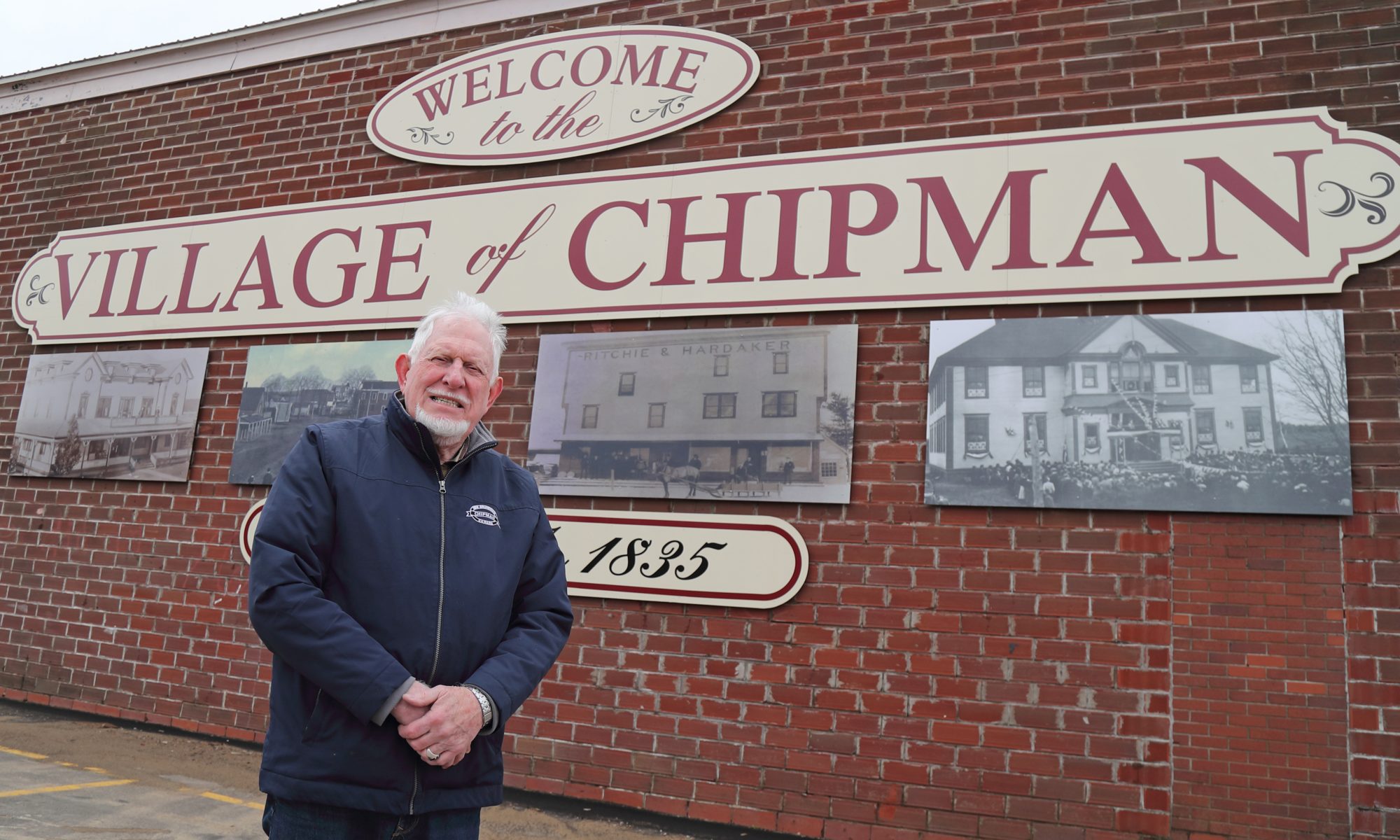
Cover Photo: Chipman Mayor Carson Atkinson predicts that without immigrants, Chipman might lose its elementary school, its medical clinic and its post office.
Maryna Getalo did not know it would be so much harder to put down roots in her second Canadian home than it was in her first. After all, the Ukrainian immigrant had already lived in Canada for three years when she moved to Chipman, a tiny forest industry town in New Brunswick. Her English skills were top-notch. In Fredericton, she had figured out how to make friends and how to find a job–even if stacking sandwiches at a fast food franchise didn’t take advantage of her decade of engineering experience.
But a year after moving, Getalo says she still has no friends–and can’t figure out how to make any.
“We went to a Christmas dinner at the Legion, but even there, everyone just stayed 30 minutes and then left. No one talked. No one stayed.”
The challenges of immigration in small communities are different than in cities, both for newcomers and for local residents. Solving them may be key to the future prosperity of a rural Atlantic Canada that’s short on skilled labour, from forests to fisheries to farms.
Towns all over this region are wooing immigrants as the population ages and shrinks. More people have died than were born in New Brunswick for each of the last five years. Chipman’s civic leaders are in their 70s and the age of its average resident is north of 50. The town’s population declined for a decade until its major employer, J.D. Irving, began recruiting workers in Ukraine, Latvia, Scotland and Finland.
“Small rural communities are being hollowed out completely,” says Chipman Mayor Carson Atkinson, who helped develop a strategic plan for his town that relies in part on bringing overseas workers to the local mill.
The push for newcomers in rural Atlantic Canada is showing progress. There are more immigrants settling in these areas than ever before, but the influx has not always been a smooth process. There is no single narrative that fits all small towns, but the experience in Chipman illustrates several key themes: there is more isolation in small towns than in cities, with less access to the kind of cultural and recreational activities where neighbours can bond, and a narrower range of employment opportunities. There is less access to medical care, language classes, non-Christian places of worship, child care, and food and consumer goods from other cultures. And there is an ongoing housing crisis.
Infogram
On average, immigrant retention has been steadily increasing in the Atlantic provinces in recent years and the populations of the three Maritime provinces are rising for the first time in years. While increasing numbers are going beyond urban centres, there is no hard data yet about how long immigrants to rural Atlantic Canada are staying in their new communities.
Not everyone in Atlantic Canada is convinced that recruiting newcomers is the answer to the rural population problem. Some still complain that newcomers are taking jobs that should go to local residents. Others worry that newcomers will stick around just long enough to get permanent resident status, then abandon their new jobs, new villages and new friends for Canada’s bigger cities, leaving small towns once again in the lurch.
Jobs for local residents
Sherri Chase says out loud what many in the town of Chipman will only say off the record, through anonymous website posts or on social media: She thinks that the men J.D. Irving has brought in from Latvia, Finland, Scotland and Ukraine to drive trucks and work in the woods are taking jobs that rightly belong to her husband and son.
“My husband worked in the woods all his life. He applied over and over again at the mill, but he never even got an interview.”
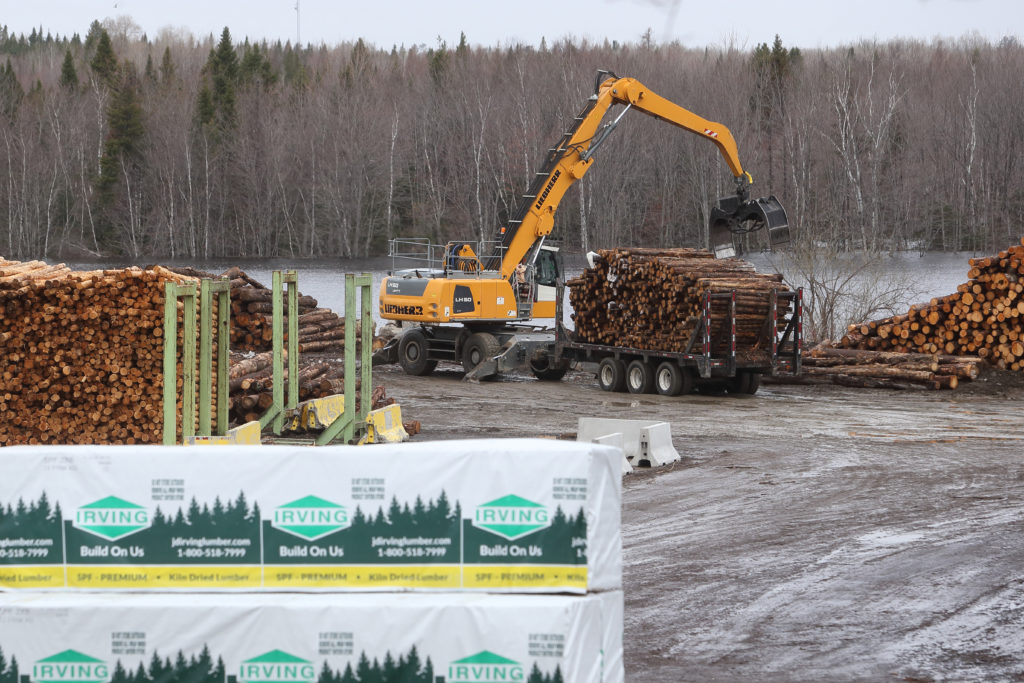
The Grand Lake Timber Mill is the heart of Chipman. Its front gate opens directly onto Main Street and is lined with a high wall of raw logs. The entire town smells like a pungent Christmas-tree lot, and freight cars loaded with lumber bound for the U.S. rumble through the dark five nights a week. It is not an exaggeration to say that every job in Chipman is tied in some way to the mill.
Chase runs Chipman Community Care, a non-profit food bank, clothing bank and drop-in centre. It is a cozy place with wood paneling, sofas and a big dining room table. One of its most welcoming features is Chase’s loud, frequent, raspy laugh.
Chase has forged a strong bond with one of the newcomers. Tomi Havimäki came to Chipman from Finland in 2018. When Chase realized the newcomer was on his own, and only in his early 20s, she invited him over. Now he joins her family for a meal at least once a week, and they talk every other day.
“He calls me his Canadian aunt and I call him my Finnish nephew. What a nice, nice young man he is. He’s friendly, fun-loving, hard-working.”
Still, Chase believes that Havimäki was hired to do a job that her husband could do and that he wants to do.
Tomi is great, but there are skilled people who had to move away from Chipman because they can’t get hired. And that’s not right.
Doug Tyler is a former provincial minister of natural resources who is now a consultant to J.D. Irving. He is also a lifelong resident of Chipman and one of the people who helped put together the plan to recruit immigrants for Irving’s forestry operation. He doesn’t believe that Irving is hiring immigrants for jobs that could be filled by local residents, but he understands why some believe that to be true.
“I understand when someone tells me that. There are many, many reasons that someone might not be hired. They need grade 12 and certain skills. Irving does everything it can to hire locally. It’s a lot less expensive to hire someone locally than to recruit from overseas and bring someone in. That’s their first priority.”
Tyler believes that the resistance to immigration is rooted more in the area’s economic history than in contemporary reality.
“In small rural communities, most have spent a lifetime discussing no jobs and no opportunity,” he says. “Now they are faced with a situation where there are jobs, but not enough people. It’s very hard after decades of one narrative to completely flip the narrative around.”
J.D. Irving vice president Mary Keith says the company only turns to immigrant labour when it can’t find local workers to fill jobs. She points out that only 11 foreign workers have arrived in Chipman so far. Keith says that 99 per cent of the company’s sawmill workers are Canadian, 95 per cent of its harvesting contractors are Canadian and 93 per cent of its truckers are Canadian. She says they have advertised almost 150 jobs in the area since 2017 and held an open house last fall because they need to recruit 263 people to the mill and woodlands operation over the next two years.
“Our priority is to hire qualified Canadians first,” she insists.
J.D. Irving intends to hire a total of 7,500 people in all its divisions over the next three years; only 400 are expected come from outside Canada. The company has had trouble finding enough qualified workers, and so Irving is one of the few companies in Atlantic Canada with its own director of immigration.
“Our goal is to increase the population and related community and economic contributions these new families bring to rural communities like Chipman,” Keith says.
Don Gould is also worried that immigrants are getting jobs that locals could do. Like Chase, Atkinson and Tyler, he thinks immigration is key to the survival of rural New Brunswick, but he also thinks that Irving has gone too far in recruiting offshore labour.
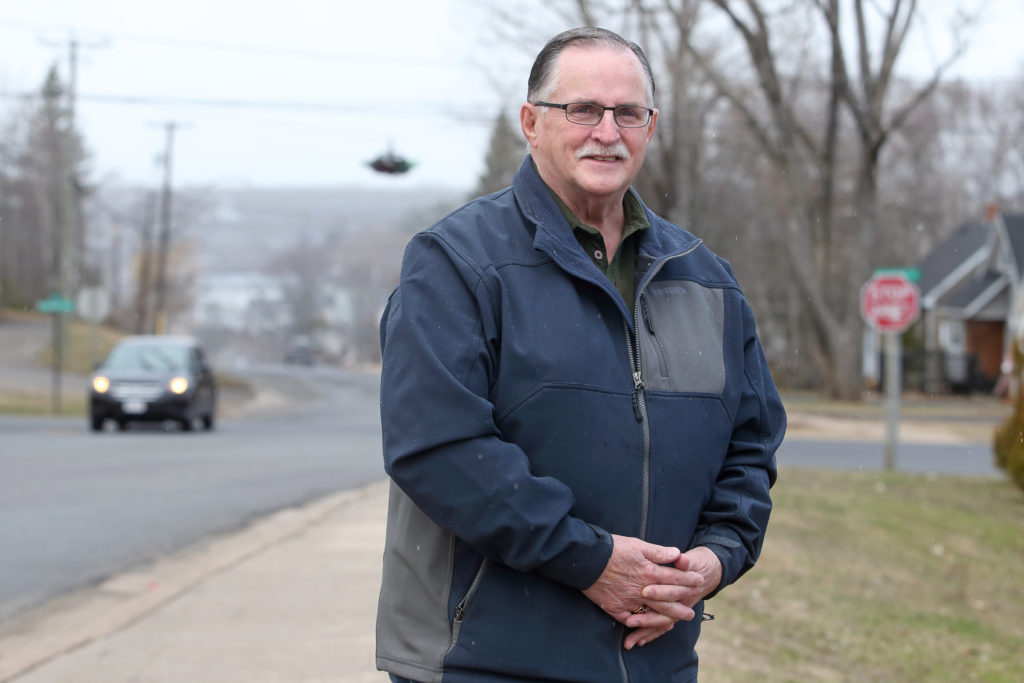
Gould was mayor of nearby Minto for 20 years, retiring last year. He arranged a job fair with Irving for town residents in the fall of 2017. He says he screened every applicant to make sure they met Irving’s strict standards, such as having a high school diploma and certain job skills. He says 35 people were invited to the fair, but not one was hired.
Gould wants both Irving and the provincial government to launch a pilot project to train local residents for local jobs.
Keith says the company is already doing that.
“We want both locals and newcomers to succeed and to this end have invested over $2.5 million since 2013 in mentors.”
Housing woes
Employers also find themselves having to invest in housing, like company towns of two generations ago.
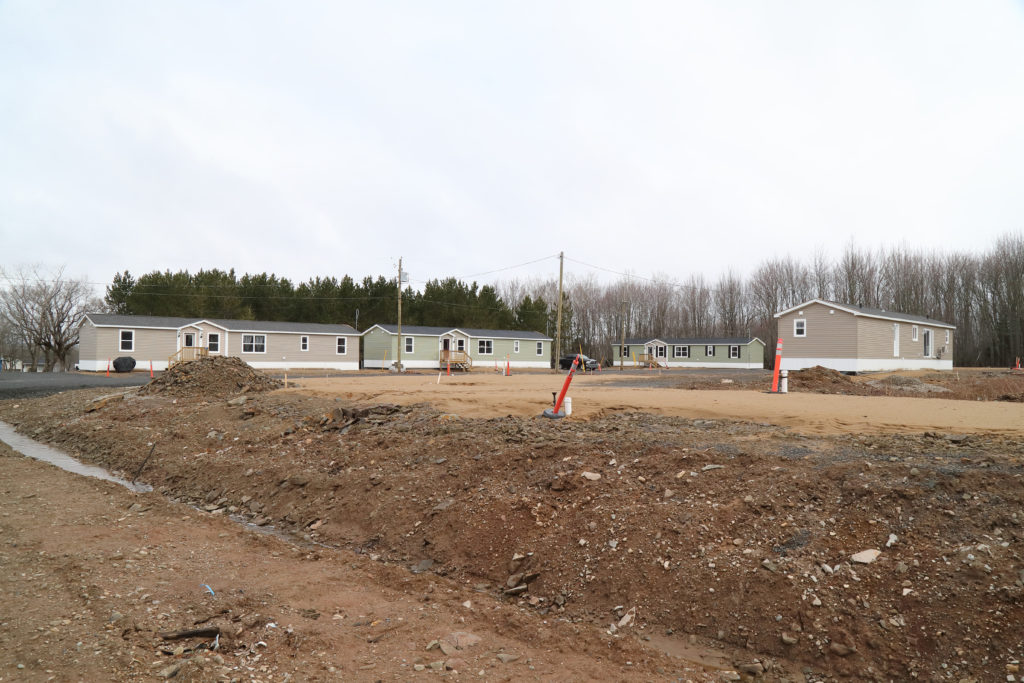
The lack of decent housing for foreign workers prompted J.D. Irving to partner with the town of Chipman to build a subdivision of new homes where immigrant families can reside temporarily until they find a more permanent apartment or house, says Keith.
In the municipality of Clare, Nova Scotia, Riverside Lobster converted an old hotel to house 30 foreign workers and now is about to build a subdivision of semi-detached homes for families that are to arrive this summer. The company expects to have more than 100 foreign-born employees working at the plant within a year. In Prince Edward Island, rents have jumped with an influx of new immigrant workers.
RELATED: Newcomers build up economy but dilute Francophone culture
The crisis
Chipman Mayor Carson Atkinson knows that some people in his town believe the newcomers are taking their jobs. He doesn’t think that’s true, and he doesn’t think they appreciate that the town won’t survive without new blood.
A thick stack of reports from think tanks, governments and academics all show that population decline in Atlantic Canada is dire. The Atlantic Provinces Economic Council reported that the regional labour force has shrunk by more than 30,000 people since 2012. A report for the New Brunswick Multicultural Council estimates that the workforce of New Brunswick alone will shrink by 40,000 in the next 15 years—unless the province can attract many new immigrants.
Chipman has already lost its only bank. The Scotiabank building was converted to a Robin’s Donuts in 2017. Without immigrants, Atkinson predicts, Chipman might lose its elementary school, its medical clinic and its post office.
“What’s a town without a post office?”
Lonely and alone
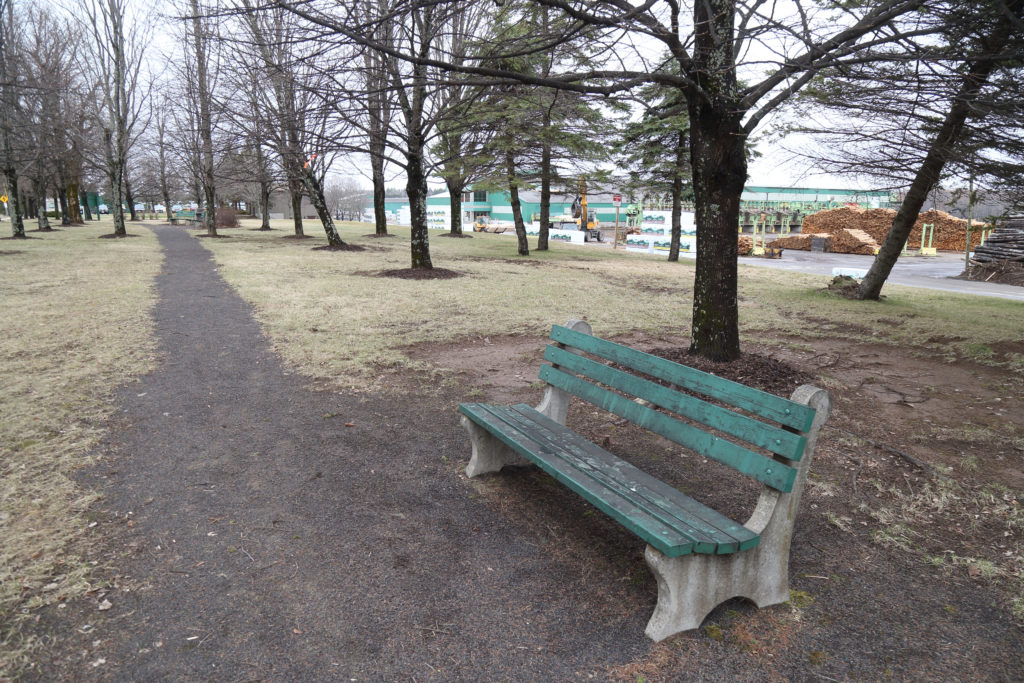
Walls and a roof are a tangible problem that can be fixed with money and a little imagination. A larger problem for many immigrants in rural communities is social isolation.
Maryna Getalo and her husband are from a Ukrainian city near the Russian border in an area that has been dipping in and out of war for almost a decade. Both arrived in Canada with graduate degrees. Her husband had a doctorate from the U.K. and she had 10 years of experience as an engineer.
Their plan was to stay just two years while her husband did a post-doctoral fellowship at the University of New Brunswick. That changed shortly after they touched down in Fredericton.
“With the first view of Canada, we decided to stay. Here we feel safe and we know what will happen tomorrow.”
They lived in Fredericton while her husband finished a project with New Brunswick Power. They both applied for work with J.D. Irving and both received interviews, but only her husband was offered a job.
Their daughter, Emily Victoria, was born last fall.
Staying home with an infant is hard, lonely work in any country, but it’s harder without friends, relatives or neighbours nearby. The only doctor in Chipman is not taking new patients, so Getalo has to drive an hour each way to Sussex whenever her infant needs a checkup or gets a cold.
Getalo says her life would change if there were some natural way to socialize with her neighbours. She lists the things that would make it easier for her to connect with the community: a public pool, a park, hiking trails, a beach on the river, a gym—even a meeting room that doesn’t charge rent.
“I like to meet people and I cannot. Here, people like to sit at home. People visit with relatives. It is difficult to get them from home. It is very boring here, especially in winter.”
“You need to keep people busy so they don’t think about leaving this place.”
Getalo’s only social contact is a play group that meets one day a week. She says she enjoys the outing and likes the other mothers, but it hasn’t reduced her isolation.
Getalo lays out her concerns about Chipman with dispassion. It is an analysis, not a complaint.
“I see mothers at play group, but they aren’t my friends. Nobody asks me out with the kids. If I asked them, ‘Why don’t you want to be my friend?’ They would say, ‘We do! We do! Let’s get together!’ But it would not happen.”
Getalo does not resent the other mothers for failing to include her in their lives. Trying to befriend a woman they don’t know, whose English is a little hard to understand, is work, she says.
“I get it. They need to relax too.”
Officials and employers in many small towns are focusing on how to help the spouses of new workers feel at home in their new communities. In Meteghan, Nova Scotia, Riverside Lobster International is opening a child care centre to ensure that spouses of their workers can get a job and make local connections. Frank Anderson, Corporate Affairs Officer for Riverside, says opening the child care centre is part of his company’s effort to retain at least 80 percent of its workers long term.
“Now we have to accept that housing and day care is part of the cost of doing business in Nova Scotia,” he told a conference in Halifax.
So far, there is no child care facility in Chipman.
Without a job or a way to make enduring friends, Getalo finds herself craving the companionship, ease and culture of Fredericton.
“All these small points add up to a big minus of living here.”
Retention questions
Chipman’s experiment with immigration is new. The first offshore workers began to arrive in 2018. Other small towns in Atlantic Canada have been working on recruiting immigrants for several years.
In some of those communities, the local fear is not that immigrants will steal local jobs, but that they will break hearts.
The south shore of Labrador has been dependent on foreign labour for half a decade. Immigrants from the Philippines, Tunisia, Morocco, the Democratic Republic of the Congo, Sri Lanka and other countries are hotel workers, mechanics, retail clerks, bakers and trucker drivers in the tiny towns of Forteau, L’Anse au Loup and L’Anse Amour.
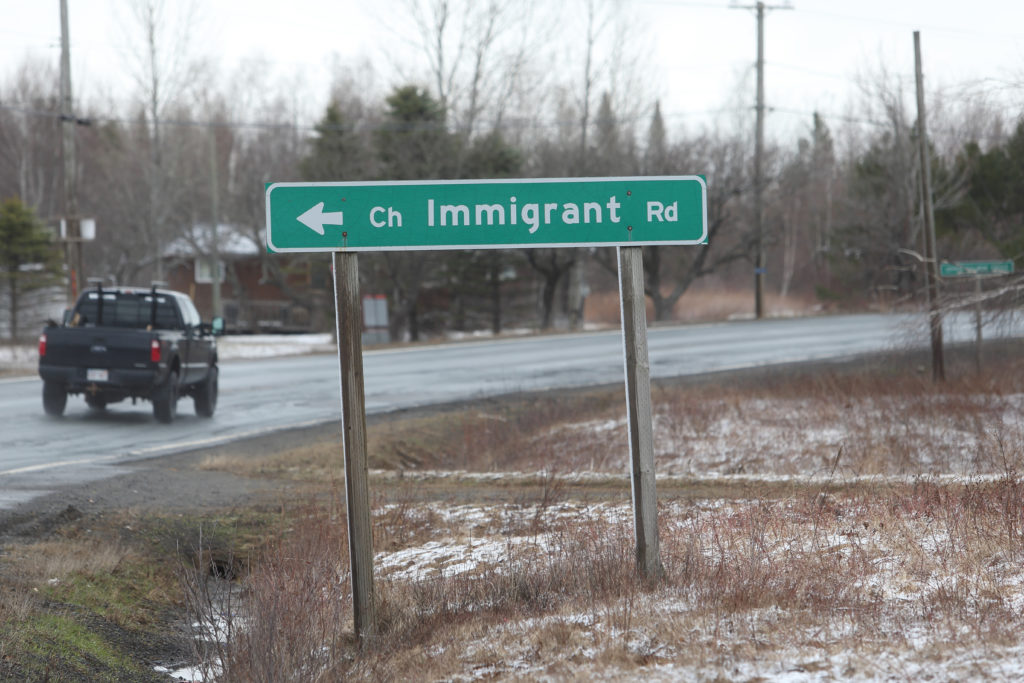
Speaking with a reporter last year, local residents expressed gratitude at newcomers who were working in their towns, saying the communities wouldn’t be able to function without them. And most of the new workers said that they planned to stay in Labrador even after they receive permanent resident status and would be free to work anywhere in Canada.
That hasn’t happened.
Tyrone Normore thought that the two mechanics from Tunisia who fixed snowmobiles for his Ski-Doo franchise in L’Anse au Loup would stay after they received their permanent resident visas. They had worked for him for four years when their papers came through. He says they gave him two weeks’ notice.
“I feel kind of burned, really I do,” he says.
Lisa Davis-Ryland was sure that the Ben Atti family was going to stay in English Point. Davis-Ryland became best friends with Rym Ben Atti, a Tunisian businesswoman whose husband was recruited to drive a truck in Labrador. Lisa and Rym’s sons also became best friends and Lisa’s mother, Rita Davis, became a proxy grandmother to the whole clan.
“If you want to have a good future for your family, you come to Labrador,” Rym said last year to explain why she wanted to raise her sons in Labrador. Six months later, the family moved to Quebec.
Rym said they left because it was too hard to visit her family in Tunisia from Labrador. Lisa Davis-Ryland is still close to Rym and talks to her every week, but she says it really hurt when her best friend left.
“I would never go through that again. I swear I will never befriend another foreign family.”
Atkinson knows that not every immigrant will stay. His hope is that 60 percent of the workers who come to Chipman will remain in town for at least one year after they become permanent residents.
“That would be a big win for us.”
Atkinson and Tyler both say that the town will need to work hard to keep the new residents. They know there are many reasons that new immigrants gravitate to bigger cities. It isn’t just problems with housing and social isolation.
Whether newcomers stay in Chipman will be decided by those who grew up there, says Tyler.
“We have a chance to turn the tide from decline to growth,” he says. “But we only have this opportunity once. If we are successful, we will have more vibrant schools, a larger population and better services for everybody. (The people of Chipman) have to understand this initiative is going to help them. We are making progress, but there is lots more work to do.”
Related Articles