

Social Innovation

Thinking Twice About Technology and the Future of Work
Technology is being used to change power balances in workplaces and to perpetuate long-standing precarious employment relationships, Jim Stanford argues. But the exploitative practices of the gig economy reflect deliberate choices, rather than the inevitable onward march of technology, and creating better jobs also lies within our power.

Solving the Skills Puzzle: The Missing Piece is Good Information
In a world of work increasingly driven by the supply and demand of skills rather than the qualifications of graduates, employers have trouble finding the workers they need and workers struggle to keep up with changing demands. Emna Braham and Steven Tobin explain how better and more accessible labour market information lies at the heart of clarifying the skills and training needs of today and tomorrow.

Understanding the Future of Skills: Trends and Global Policy Responses
In our first Skills Next report, we look at top research and skills training programs that are succeeding internationally, and highlight for Canadian policymakers key features driving success. Authors Sunil Johal and Michael Urban distill key lessons for Canada to ensure workers are equipped with the skills they need to thrive in tomorrow’s economy, whatever shape it takes.

Learning to Change: Worker Resilience and Adaptability
What does it mean to be adaptable and resilient as a worker, in the face of radical changes to work? With a focus on Alberta, emerging leaders from the Banff Forum and the City of Edmonton discussed policy lessons and policy solutions to prepare individuals and employers for workforce change.

Paycheque to Paycheque: Coping with Income Volatility as Work Changes
What can we do about workers living paycheque to paycheque, with the rise of the gig economy and future changes to work? Emerging leaders from the Banff Forum gathered and came up with a holistic set of policy measures for improving the well-being of workers and to help prevent economic marginalization as work changes.

Skills Next
As the future of work continues to evolve, so too do the skills that Canadians will need to succeed. Over the summer, the Public Policy Forum, the Diversity Institute at Ryerson University and the Future Skills Centre will release six new reports to identify the most important issues currently impacting skills policymaking. Read key takeaways in each report that will strengthen policymaking and build a strong foundation intended to help support further research.
Let’s build a better Canada together. Whether you’re looking to support our mission by becoming a member, partnering with us on a project or sponsoring an event, your engagement helps drive informed, inclusive policy across the country.

Beyond the Big City
How can small communities and rural areas in Canada attract and retain newcomers, most of whom prefer to settle in a few large metropolitan areas? This report examines the experiences of five communities that have looked to immigration to help reverse declining populations and boost economic prospects, and proposes short and long-term solutions.

Policy Approaches to Harmful Content Online
Canadian society has the resources to operate more effectively than violent extremists — and at scale — said panelists at two PPF events on countering radicalization online. Participants made recommendations in four policy areas to combat hate that festers without intervention, which not only threatens public safety, but the human rights and lived-experiences of all Canadians.

Report Preview: Do Canadians’ fears about automation push them to populism?
In an upcoming report for PPF’s Brave New Work project, Peter Loewen and Benjamin Allen Stevens find a correlation between Canadians’ fear of job losses from automation and populist and nativist views—but also that they favour traditional government policy approaches to job disruption, such as retraining, more than radical measures such as reducing immigration.
Past Event
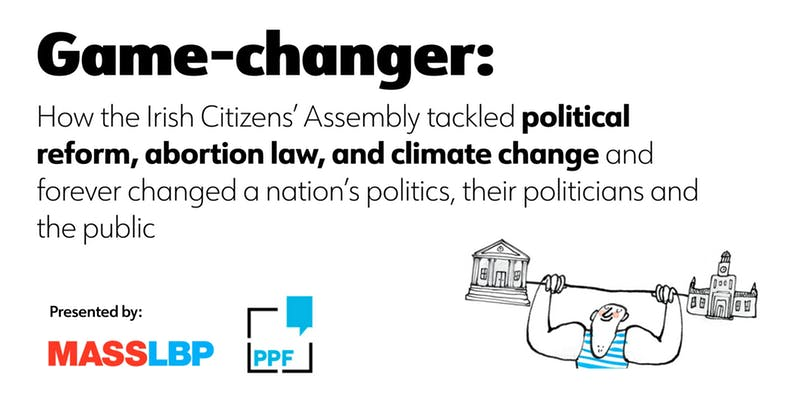
Jane Suiter on the Irish Citizens’ Assembly and its lessons for Canada
Three years ago, ninety-nine randomly selected citizens from across Ireland met for twelve weekends to tackle a range of issues that had deadlocked politicians: abortion, climate change, aging, and parliamentary reform. Join us on May 29 in Ottawa for a special talk with Dr. Jane Suiter about the story of the Irish Citizens' Assembly and its lessons for Canada.

How do we build an inclusive future of work?
Emerging leaders from the Banff Forum gathered to discuss: Who is missing from Canadians' dialogue about our brave new world of work? They came up with a clear set of guiding principles and recommendations for policymakers.

Facilitating the Future of Work Through a Modernized EI System
Gaps in Canada’s Employment Insurance program are already leaving too many workers behind as gig work, part-time jobs and self-employment grow. EI needs to be modernized now to support Canadians as they transition to an economy and labour market disrupted by technology and automation.

Past Event
Indigenous Innovators Breakfast
PPF highlighted Indigenous innovation at a breakfast event on the morning of Thursday April 11, 2019 prior to the Canada Growth Summit.

Atlantic Newsletter #2: What we can learn from refugees’ success in Atlantic Canada
In this second edition of our Atlantic Immigration & Revitalization Newsletter, PPF research associate Kelly Toughill talks to leaders and refugees across Atlantic Canada to understand what we can learn from their higher retention rates and overall success
CBC Radio: Canadian newspapers have a lot to learn from the Saskatchewan Roughriders: report
"The Canadian journalism industry may be able to learn a thing or two from the Saskatchewan Roughriders, according to a new report," reads the CBC News article about the PPF report What the Saskatchewan Roughriders Can Teach Canadian Journalism. "The report is one of two released on Tuesday by the Public Policy Forum. The other adds to concerns about the decline of the industry and says the number of articles published in newspapers across 20 small and mid-sized Canadian communities declined by 50 per cent between 2008 and 2017." Accompanying the article was a radio interview with PPF's CEO Edward Greenspon.