


Speer: Is Canadian politics shaped by “the revenge of places that don’t matter”?
Bridging the urban-rural divide in CanadaSean Speer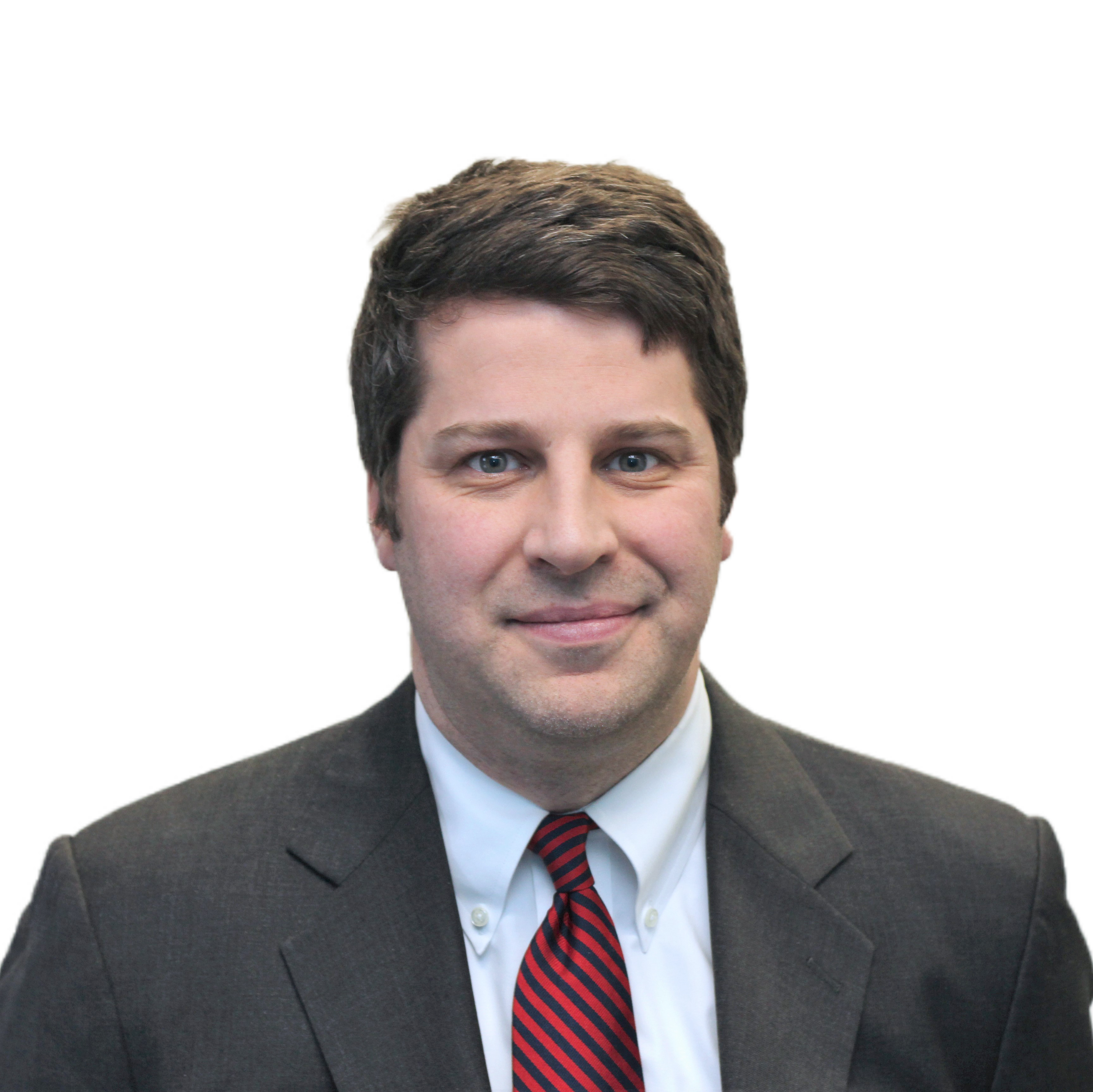 is the Prime Ministers of Canada Fellow at the Public Policy Forum.
Donald Trump’s improbable election victory in 2016 is sometimes characterized as “the revenge of places that don’t matter.”
The idea? That voters in American cities and towns experiencing economic distress are feeling neglected by mainstream politics and exacted revenge against economic and political elites by helping to put Trump in office.
The real motivations are impossible to divine but the basic economic facts broadly support the theory. Consider the following:
- Counties that experienced large import shocks from China and Mexico disproportionately supported Trump. It’s estimated a one-point increase in import competition from China was associated with 2.9% increase in support for Trump, relative to the county’s historical average support for Republican candidates.
- Places that saw a large drop in the number of business establishments between 2012 and 2016 voted in much greater numbers for Trump than they did for Mitt Romney, a fellow Republican candidate, in the 2012 election.
- The counties that voted for Barack Obama in 2008 and 2012 but flipped to Trump in 2016 are laggards across a range of economic indicators including business starts and employment growth.
- The roughly 500 counties that Hilary Clinton won in 2016 are responsible for 64% of US economic output. Trump’s more than 2,600 counties only comprise 36% of the American economy.
- Nine of the ten states with the lowest labour force participation rates voted for Trump. And, of the five states that flipped for Republicans in 2016, three experienced a drop in their participation rates and the other two were flat.
The link between a place’s level of economic distress and support for the president is thus rather strong. The case that the 2016 election result was an expression of anxiety, desperation, and frustration on the part of “places that don’t matter” seems difficult to refute. It makes one wonder about Canada:
How does our economy perform across these different metrics? Are we experiencing a similar place-based bifurcation? Could Canadian politics be shaped by the revenge of our own cities and towns struggling to thrive in the modern economy?
As a starting point to answering these questions, it’s important to draw on the evidence. A cursory review shows that Canada’s economy is similarly marked by differing outcomes based on one’s location. Just consider the following:
- More than 60% of Canada’s economic output and national employment comes from cities with 500,000 or more residents. Toronto is responsible for 20% alone. Add Montreal and Vancouver and the number rises to 37%.
- Employment in Canada’s rural towns is still below pre-recession levels from 2008-2009 and yet it’s up by close to 15% in bigger centres.
- The employment rate for working-age men (aged 25 to 54) is more than 5-percentage points lower in rural communities than urban centres.
- The dependency rate (referring to the number of people relying on government transfers) is 2.8 times greater in rural Ontario than in urban parts of the province.
The list goes on. The economic gap between urban and rural places in Canada is significant. The overall picture doesn’t look much different than the one that contributed to Trump’s election.
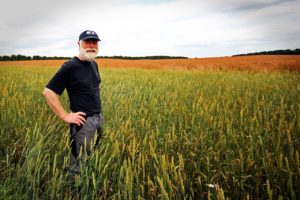 This should be a wake-up call for Canadian policymakers. The takeaway is that we cannot afford distressed communities to come to the view that they don’t matter. Developing and advancing a policy agenda to extend opportunity and work to places on the margins of our economy is the best means of showing that they do indeed matter. This work strikes me as the most important political economy exercise facing our country.
As the new Prime Minister of Canada Fellow at the Public Policy Forum, I’m grateful for the opportunity to contribute to this work. Over the coming months, I’ll be producing a series of commentaries and papers (including new and original polling data), as well as traveling to different urban centres and rural towns to better understand the magnitude of the urban-rural divide in our country and formulate a policy agenda that can build a bridge between them.
Our work will be cross-cutting and cover a wide range of areas including education, competitiveness, the future of work, and reconciliation with Indigenous peoples.
The goal is to develop a policy agenda that pulls on various levers to catalyze economic activity in our distressed communities and ultimately create the conditions for shared prosperity across Canada.
But it won’t just be about public policy. It will involve cultivating greater empathy through a shared understanding of urban and rural cultures, for the opportunities and challenges present in different places, and the common values and aspirations that animate us. One might think of the project as enabling a two-way conversation between urban and rural Canadians.
A big part of the effort will require that we get out and visit different places to better understand how Canadians live, think, and feel.
We’ll learn about Digby, Nova Scotia’s annual Scallop Days and the town’s unofficial reputation as the “scallop capital of the world” and Moose Jaw, Saskatchewan’s growing economy and sense of community optimism. You’ll read about Fredericton, New Brunswick’s unlikely title as the home to more Syrian refugees per capita than anywhere else in Canada and Port McNeill, British Columbia’s struggles in the face of sustained job losses in the forestry sector.
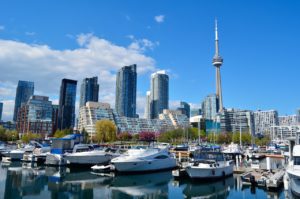
We’ll investigate Montreal’s reputation as the “cultural capital of Canada” and Toronto’s growing challenges of ongoing development, socio-economic segregation, and gang and gun violence.
And, of course, we’ll visit my hometown of Thunder Bay to see how it’s managing the opportunities and challenges of economic transformation and reconciliation with its Indigenous population.
Bridging Canada’s urban-rural divide is critical to protecting against the type of polarization reflected in American politics and society. We hope that this project contributes to greater economic and political inclusiveness in the country. The ultimate goal must be to make sure that everyone and everywhere feels like they matter.
Get the latest from Sean’s travels by signing up for updates:
PPF is grateful to the RBC Foundation for its support of this Prime Ministers of Canada Fellowship.

About the Author

Sean Speer
Related Articles