
Economy

Past Event
Turning Point 2020: When the Future of Work Became the Present
When we look back on 2020, we’ll see a turning point, but right now the destination is unclear. This free, 3-part virtual conference on the future of work in Canada was held on June 16, 17, & 18th, 2020.

Atlantic Newsletter #6: People-centric economic development & taking stock of all things skills
In the sixth edition of our Atlantic Newsletter, our latest report explores how is Atlantic Canada working to retain international students and our Skills Next series looks at what Canadians will need to succeed with the changing nature of work. Plus: a sneak peak at upcoming reports on Atlantic growth & save the date for the 2020 Atlantic Immigration and Revitalization Summit and Frank McKenna Awards Dinner.

Mowat NFP
In 2012, Mowat established a research hub to provide evidence-based research and analysis on systemic issues facing the non-profit sector in Canada. In 2019, Mowat NFP joined the Public Policy Forum. In its final year of operation (2019-2020), Mowat NFP published four reports that focus on implementing the recommendations of the Special Senate Committee on the Charitable Sector and exploring the future of finance and funding in the sector.

Opinion: How Canada could strike a grand bargain on climate and energy
OPINION: Needed: A grand bargain on climate and energy. How: The Energy Future Forum brings together the players — from oil and gas producers to environmentalists, governments, bankers, utilities, academics and Indigenous leaders. The Mission: To find ways Canada can meet or exceed its targets under the Paris climate agreement on the way to a net-zero future, while strengthening the economy and enhancing national unity. When: Now.

Leveraging the Skills of Social Sciences and Humanities Graduates
Canadians are among the best-educated people on the planet. But are they getting the education they need — particularly in the fields of social sciences and humanities — to maximize their employment prospects in today's fast-changing workplace? This report explores the level of the so-called "skills gap" and identifies issues and solutions to equip university graduates with the tools to transition from student to employee.

Return on Investment: Industry Leadership on Upskilling and Reskilling their Workforce
As technology changes the nature of work, Canadian companies must create a culture of continuous learning to ensure employees have the skills they need. Many companies have already begun, investing hundreds of millions of dollars in upskilling and reskilling programs to address the skills gap. In latest Skills Next report, Wendy Cukier provides an overview of how companies including AT&T, Scotiabank, TD Bank, Accenture and Walmart are retraining their workforces. Further, it considers the role of government investment, public-private partnerships, and corporate social responsibility in upskilling and reskilling.
Let’s build a better Canada together. Whether you’re looking to support our mission by becoming a member, partnering with us on a project or sponsoring an event, your engagement helps drive informed, inclusive policy across the country.

Skills Gaps, Underemployment, and Equity of Labour-Market Opportunities for Persons with Disabilities in Canada
While people with disabilities can achieve socially integrated, financially independent lives through secure, well-paid employment, they are often trapped in low-skill jobs at high risk of automation. Emile Tompa, Daniel Samosh and Normand Boucher underscore the importance of training opportunities that are well aligned with the skills likely to be in high demand in future.
Employment Gaps and Underemployment for Racialized Groups and Immigrants in Canada
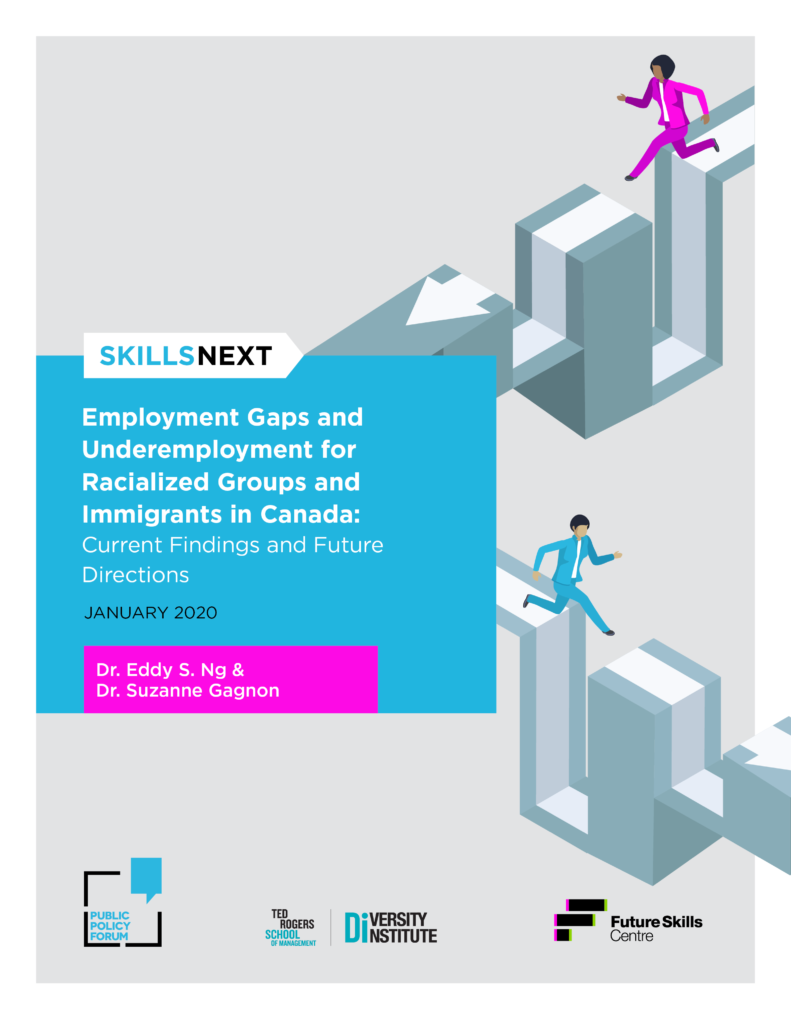
“Foreign-sounding names” are 20 to 40 per cent less likely to get a call-back for a job interview, depending on company size. Challenges like these are faced by immigrants, racialized people, and especially women in these two groups – seemingly regardless of the job candidate’s skills. Eddy Ng and Suzanne Gagnon shine a light on some of the apparent contradictions in Canadian hiring behaviour, and bring to the light some promising solutions found in the labour-market research in this fifth Skills Next report.

Bridging the Digital Skills Gap: Alternative Pathways
Digital skills and digital careers are part of every industry’s future. Yet employers say they can't find workers with the information and communication technology (ICT) skills they need. In this report, Shortt, Robson and Sabat explain how Canada doesn't really have system for figuring out where digital technology jobs end and regular jobs begin – and explore how a shared definitions of digital skills and careers will be the gateway for policymakers and employers to fill any gaps.

Thinking Twice About Technology and the Future of Work
Technology is being used to change power balances in workplaces and to perpetuate long-standing precarious employment relationships, Jim Stanford argues. But the exploitative practices of the gig economy reflect deliberate choices, rather than the inevitable onward march of technology, and creating better jobs also lies within our power.

Solving the Skills Puzzle: The Missing Piece is Good Information
In a world of work increasingly driven by the supply and demand of skills rather than the qualifications of graduates, employers have trouble finding the workers they need and workers struggle to keep up with changing demands. Emna Braham and Steven Tobin explain how better and more accessible labour market information lies at the heart of clarifying the skills and training needs of today and tomorrow.

Understanding the Future of Skills: Trends and Global Policy Responses
In our first Skills Next report, we look at top research and skills training programs that are succeeding internationally, and highlight for Canadian policymakers key features driving success. Authors Sunil Johal and Michael Urban distill key lessons for Canada to ensure workers are equipped with the skills they need to thrive in tomorrow’s economy, whatever shape it takes.

Groups from Across Canada Join Initiative to Get Climate and Energy Policy Working Together
The Energy Future Forum (EFF), a new pan-Canadian initiative to develop policy answers that reduce greenhouse gas emissions and strengthen the economy, was officially launched on Dec. 16 at a meeting in Toronto. It's an "unprecedented effort to find common cause in addressing Canada’s climate and energy challenges,” said PPF's Edward Greenspon.

Managing Precarious Work: Three Canadian Models for Rebalancing Bargaining Power in the Future of Work
Hear the expression “precarious employment” or the “gig economy” and you’ll almost certainly think of the Uber driver who took you to the airport last week. However, precarious employment dates back much further. This report examines three entrenched models—construction workers, those in film and theatre, and those in academia—for recommendations governments can use to address the growing challenge of gig work.

Announcing Brian Bohunicky as PPF’s New Vice-President of Policy
With Brian comes rigour, quality and depth. Welcome!