


Paul Santerre: A formula for turning ideas into products
This is one in a series of profiles of the winners of the 2018 Governor General’s Innovation Awards. See all honourees.
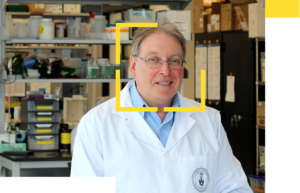
Dr. Paul Santerre has a long list of titles and achievements as a biomedical engineer, but he sums it all up in just two words: “serial inventor.” His research into the properties of plastics has created a series of companies and produced more than 60 patents for products, such as a special additive for the plastic used in medical devices like catheters to reduce clotting and improve outcomes for patients.
He recalls a time when such an initiative was not the norm — indeed, it was frowned upon by the scientific establishment. He got a taste of this attitude when he worked in an undergraduate research program at Dalhousie University in the summer of 1982, for a physical chemistry professor who had contracts to assist petroleum companies in developing soaps to extract oil from Alberta’s oil sands.
“This was a very abnormal situation. Very few basic science labs in Canada were doing commercial translation activity, as it was looked at negatively,” he recalls. “It was taboo for academic scientists to mix with industry.”
“Canada is always ranked within the top three countries in the world in people trained in post-secondary education. We have invested in growing an amazing knowledge base. Yet we don’t commercialize, at least to the extent that other countries do. It makes absolutely no sense that we would make such a great investment in intellectual capacity and not consistently turn it into a product and subsequently monetize it.”
That summer position also opened Santerre’s eyes to what the interplay between biochemistry, biology and chemistry could create. “That was very appealing,” he says. He went on to earn a PhD in Chemical Engineering in 1990 and worked on Canada’s first artificial heart program at the University of Ottawa Heart Institute, carried out through a consortium that included one of the largest manufacturers of heart valves in the world.
In 1993 he became a professor of biomaterials at the University of Toronto, where he has found practical markets for many of his innovations. One of these is EndexoTM, a compound of surface-modifying macro molecules that are added to the plastics in medical devices during the manufacturing process. Untreated plastics that come into contact with patient blood can cause clots, leading to potentially deadly complications such as heart attacks and strokes. The Endexo coating has reduced the incidence of clotting in catheters to just one percent, he says.
Santerre commercialized his technology through U of T spin-out Interface Biologics Inc. (IBI), which he co-founded in 2001 and where today he serves as chief scientific officer. The next Endexo application is expected to be the plastic hollow fibre membranes used in blood dialysis, which are also prone to clotting.
“That will be amazing,” Santerre says. “There are one to two million dialysis procedures done throughout North America daily.”
He’s working on other applications of his plastics technology, which works in harmony with the body’s natural repair processes. Therapies that are being developed in collaboration with commercial and institutional partners include regrowing tissue, regenerating spinal disks and “taping” together fractured cranial bones.
The experience gained from IBI spurred Santerre to develop an on-campus incubator called the Health Innovation Hub that teaches health science and biomedical engineering grads and early-career scientists the fundamentals of starting innovation companies. With the help of mentors, the young researchers “turn ideas into products,” says Santerre, the hub’s co-director. It has already produced 70 startups. “Hopefully in a decade we will see those innovations in the marketplace.”
It’s important for such medical innovations to drive down the cost of delivering care, he comments. “If it can’t be made practically, cheaply and easily, forget commercialization. Expensive technologies are bankrupting the healthcare system.”
Challenges include the fact that many old-school academics “are still protecting an idealistic concept referred to as the ‘purity of the science,’ in hopes to avoid its contamination with industry of any sort,”he notes. “The next generation is getting over this misguided mindset and coming on stream.”
Fundamental research does remain important to discovery, he adds. “If we want the pipeline of innovation to continue, we have to keep investing in basic research, but then we need to move it forward, not just park it.”
He’d like to see investment for startups coming from companies, such as major Canadian retailers, as well as enhanced lending from financial institutions and better support from Canada’s many philanthropists.
“Canada is only innovating at a fraction of its potential,” he says. “What we’ve got today is the tip of the iceberg. But it’s a very big iceberg.”
Articles liés