

Canada

Inclusive Innovation: Using Technology to Bridge the Urban-Rural Divide
Canada must unlock the vast economic and human potential of small towns and rural communities by building the broadband infrastructure needed for citizens to prosper in an innovative, modern digital world.

Finding Solutions to Cyber Harassment Aimed at Women in Political Life
Despite the decades-long fight for increased inclusion and opportunities for women in politics, research shows that women are significantly less likely than men to even consider running for office. When women feel they cannot voice their opinion without fear of retaliation or threat, robust political discourse is inhibited and essential voices are silenced. While stories of online violence directed at women in political life – elected or not – are plentiful, proposed solutions are few, and recourse seemingly non-existent.

Healthcare at Our Fingertips: Enabling the Digital Health Environment that Canadians Deserve
Canadians are already adopting digital- and data-driven solutions to improve their health, but their healthcare system lags far behind. Canada’s governments must adopt innovation, consumer-driven models and new regulatory frameworks in order to improve health outcomes for all.

Getting ahead of disruption is key to our future: An introduction to Canada Next
Decision makers in all fields face intense challenges to keep up with geopolitical transformation, the sweeping innovations of the digital age, the impacts on work sparked by artificial intelligence, and the catastrophic effects of climate change. Edward Greenspon and Drew Fagan introduce the challenges that Canada Next addresses.

Canada Next: 12 Ways to Get Ahead of Disruption
Canada is in flux. Technological, demographic and climate disruption will have a profound effect on the economy, the workforce, democracy, and on public services. In Canada Next: 12 Ways to Get Ahead of Disruption, top policy thinkers suggest how Canadians can not only adapt to change but embrace new possibilities in an age of uncertainty.

Brave New Work
PPF’s three-year future of work initiative will bring government, employers, education providers, individuals and labour together to find pathways for Canadians and Canadian firms to prosper in a changing world of work.
Let’s build a better Canada together. Whether you’re looking to support our mission by becoming a member, partnering with us on a project or sponsoring an event, your engagement helps drive informed, inclusive policy across the country.

Take the 2018 PPF Holiday Quiz!
What's your wonk score? From 12 months of PPF policy events and projects, we've come up with 12 questions to challenge you. Take our Holiday Quiz.

Edward Greenspon & Ivor Shapiro: Define journalists by what they do
The question of how, or whether, to demarcate who qualifies as a journalist has returned in louder, more insistent terms with the federal government’s pledge to introduce a tax credit rebating an unspecified percentage of the labour costs of newsrooms. Let's define journalists by what they do: "A definition does not infringe on anyone’s right to report and publish; it simply provides some with the advantage of a shield law or tax credit."

PPF’s new Atlantic newsletter tracks immigration and employment
Atlantic Canada faces profound demographic changes that challenge its future prosperity and economic sustainability. With a new email newsletter, the Public Policy Forum will keep you up to date on our three-year research project on immigrant retention and labour market revitalization in the region and share other timely research and articles.
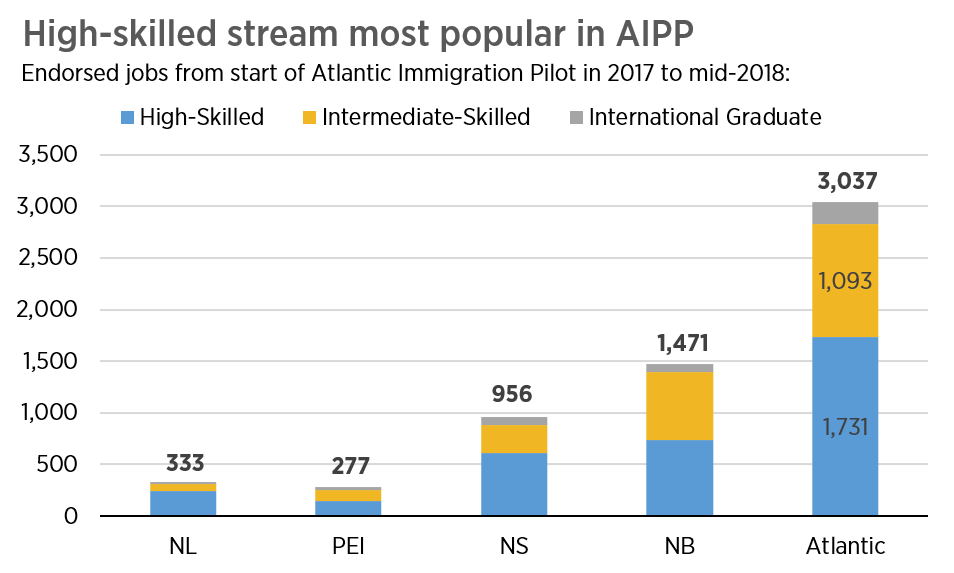
Atlantic Immigration Pilot by the numbers
More than 3,000 job offers had been made through the program by the end of October 2018, but only 1,202 workers, spouses and children were granted permanent residency through the program in the same period. Immigration, Refugees and Citizenship Canada is trying to speed up the pace of permanent residency admissions.

Pulling up roots: Bhutanese exodus from Halifax offers clues to why newcomers stay or go
The disappearance of Bhutanese from Halifax is discouraging to those who believe the future of Atlantic Canada is tied to increased immigration, but it is also an opportunity to look at the factors that encourage newcomers to take root – and the factors that lead them away.

Putting down roots: How community gardens help immigrant retention
Cultural food security is key to how and whether immigrants take root in their new home. In Halifax, Common Roots Urban Farm was the only source of some traditional foods for newcomers, but the community garden was shut down and no one knows where – or if – it will rise again.

Changes to Atlantic Immigration Pilot praised, but more are needed
Revealing the list of employers authorized to bring immigrants to Canada through the Atlantic Immigration Pilot is an important first step in combating immigration fraud.

Impacts of Artificial Intelligence on Connected and Autonomous Vehicles and Precision Medicine
As researchers and business leaders move quickly to explore and exploit an ever-growing field of artificial intelligence opportunities, policy-makers – recognizing AI’s far-reaching implications - seek frameworks to assess and regulate them. These reports examine issues and suggest frameworks for AI’s impact on transportation of people and goods, and on how we predict, identify and treat disease.

Millennial Money: Financial Independence and Well-Being for the Next Generation
Millennials are as financially knowledgeable as previous generations and are doing OK when it comes to financial well-being, but they face challenges such as housing affordability and student debt repayments that innovative policy should address.