
Technology

The Opportunity for Indigenous Infrastructure
Well-planned, reliable infrastructure is essential to the well-being of all communities. Despite major policy challenges, Indigenous people, companies and governments are closing the infrastructure gap by advancing successful equity infrastructure projects across the country. Canada should follow these examples.

Science Disinformation in a Time of Pandemic
By drawing parallels to elections, climate change and the anti-vaccination movement, author Christopher Dornan illustrates how disinformation about COVID-19 can pose significant risks for public health, social cohesion and collective trust. Dornan identifies several useful recommendations for citizens, governments and social media platforms to consider to effectively combat disinformation and engage in evidence-based discussion about scientific findings.

Reforming Canada’s Income Support Framework
The economic crisis caused by COVID-19 has shone a spotlight on the need to reform Canada’s income-support framework. Combine this with the looming risks of automation and age-related labour shortages, and we have a strong case for creating a modern framework that promotes work and minimizes earning losses for dislocated workers. As we rebuild our economy following the crisis, Canadian policy-makers will need to grapple with this complex and critical task.

EI Failed So We Made CERB: Now What Should We Learn?
When COVID-19 lockdowns came, Canada’s employment insurance system failed to cover enough of the Canadian workforce that was affected and failed administratively to keep up with the surge in applications for benefits. This new report by Jennifer Robson proposes ideas for policy reform and shows why Canadians need wage insurance in the first place.

More than Just a Rebuild: Creating a better future for Canada
The country has been held back by lagging productivity and competitiveness, leading to a stagnant growth rate incapable of lifting Canadians’ standards of living. As we rebuild, simply going back to ‘normal’ is not an option.
Let’s build a better Canada together. Whether you’re looking to support our mission by becoming a member, partnering with us on a project or sponsoring an event, your engagement helps drive informed, inclusive policy across the country.

Rebuild Canada
Before the COVID-19 crisis hit, there was already a need for public policy in Canada to adjust. Now, with the economy wounded and international cooperation frayed, we must consider the merits of a more fundamental rebuilding job. Through a series of reports and conferences, this project will tap into the best established and ascending policy brains in an effort to help policymakers weigh priorities and trade-offs and forge a far-reaching rebuild plan.


New North Star II
Intangibles are the new basis for competition, and the U.S.-China tech “cold war” is changing assumptions about global commerce and geopolitics. Authors Sean Speer, Robert Asselin and Royce Mendes make the case for a bold policy response to adapt to these geo-economic trends: a challenge-driven industrial strategy that will give Canada a competitive edge as it rebuilds post COVID-19.

Business as Unusual
In a message to the PPF community, our President & CEO Edward Greenspon addresses how PPF is re-calibrating and conceiving of new forms of digital engagement.

Leveraging the Skills of Social Sciences and Humanities Graduates
Canadians are among the best-educated people on the planet. But are they getting the education they need — particularly in the fields of social sciences and humanities — to maximize their employment prospects in today's fast-changing workplace? This report explores the level of the so-called "skills gap" and identifies issues and solutions to equip university graduates with the tools to transition from student to employee.

Return on Investment: Industry Leadership on Upskilling and Reskilling their Workforce
As technology changes the nature of work, Canadian companies must create a culture of continuous learning to ensure employees have the skills they need. Many companies have already begun, investing hundreds of millions of dollars in upskilling and reskilling programs to address the skills gap. In latest Skills Next report, Wendy Cukier provides an overview of how companies including AT&T, Scotiabank, TD Bank, Accenture and Walmart are retraining their workforces. Further, it considers the role of government investment, public-private partnerships, and corporate social responsibility in upskilling and reskilling.

Skills Gaps, Underemployment, and Equity of Labour-Market Opportunities for Persons with Disabilities in Canada
While people with disabilities can achieve socially integrated, financially independent lives through secure, well-paid employment, they are often trapped in low-skill jobs at high risk of automation. Emile Tompa, Daniel Samosh and Normand Boucher underscore the importance of training opportunities that are well aligned with the skills likely to be in high demand in future.
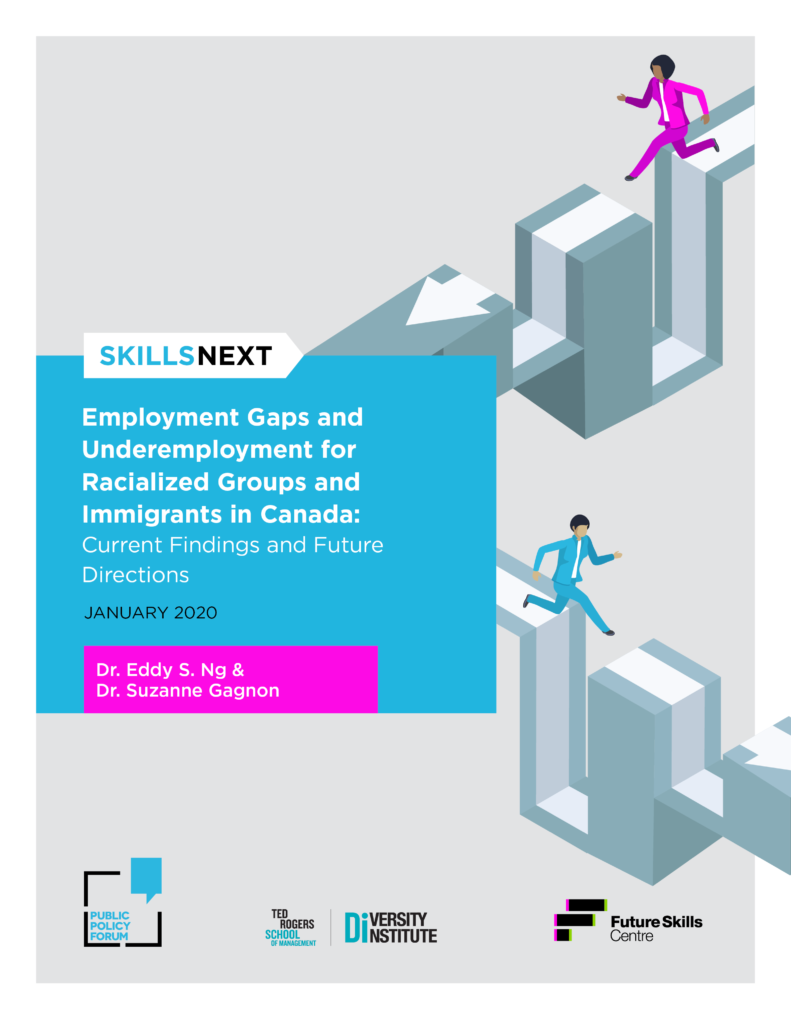
Employment Gaps and Underemployment for Racialized Groups and Immigrants in Canada
“Foreign-sounding names” are 20 to 40 per cent less likely to get a call-back for a job interview, depending on company size. Challenges like these are faced by immigrants, racialized people, and especially women in these two groups – seemingly regardless of the job candidate’s skills. Eddy Ng and Suzanne Gagnon shine a light on some of the apparent contradictions in Canadian hiring behaviour, and bring to the light some promising solutions found in the labour-market research in this fifth Skills Next report.

Bridging the Digital Skills Gap: Alternative Pathways
Digital skills and digital careers are part of every industry’s future. Yet employers say they can't find workers with the information and communication technology (ICT) skills they need. In this report, Shortt, Robson and Sabat explain how Canada doesn't really have system for figuring out where digital technology jobs end and regular jobs begin – and explore how a shared definitions of digital skills and careers will be the gateway for policymakers and employers to fill any gaps.