

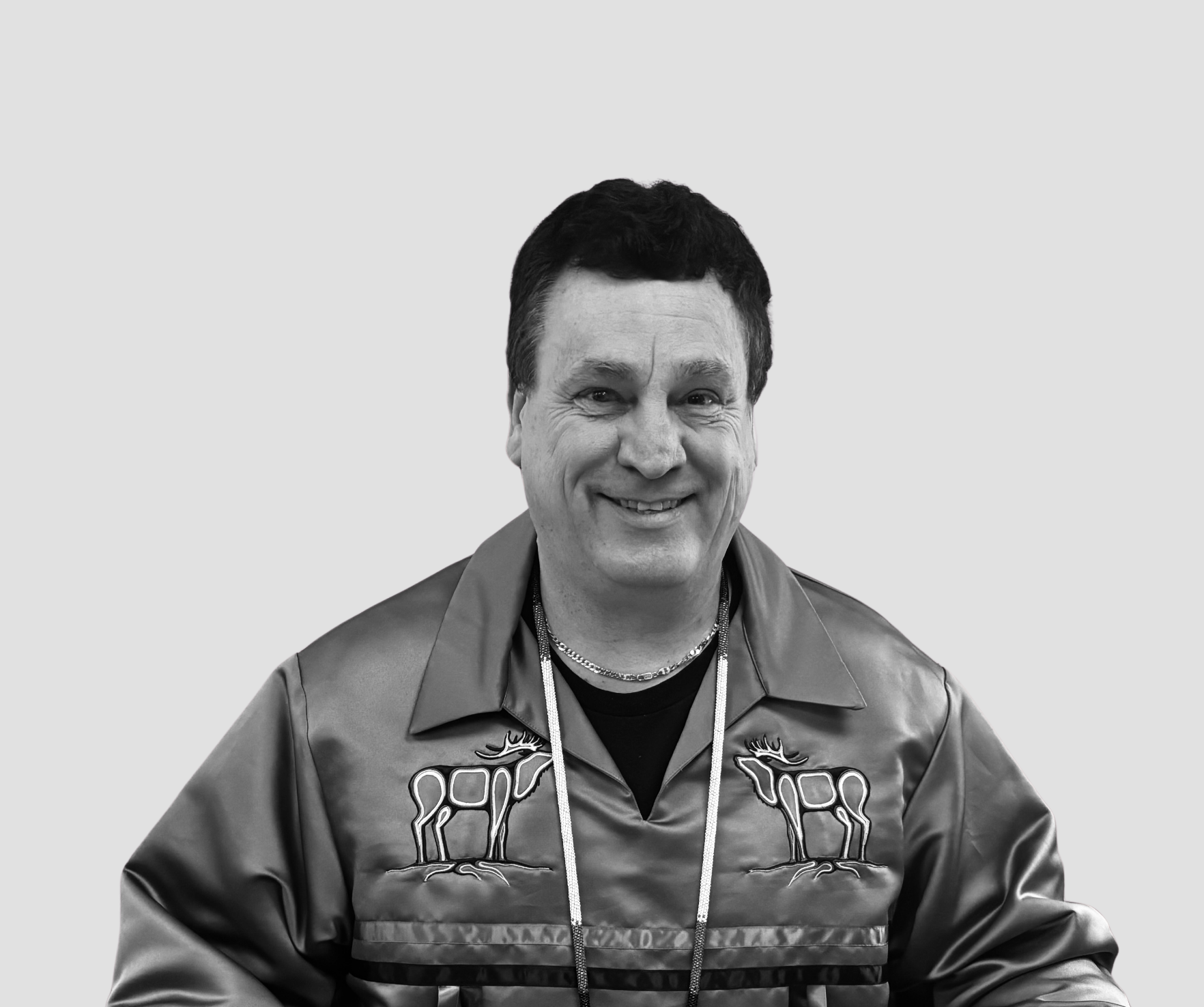
« We’re all in the same region; we’re all living here together, and we all want the same thing — prosperity for the region. »
Chief Terry Richardson started a recent morning with members of his community, helping fix something in their home; by the afternoon, he was on the phone, speaking with the prime minister’s office about a $20 million economic development project.
As leader of northern New Brunswick’s Pabineau First Nation (Oinpegitjoig L’Noeigati) since 2020, Richardson deals with everything from local to provincial to federal issues — and often all within the same day. It’s a constant whirlwind, but he’s focused on his community of 400 members and opportunities for partnerships beyond, for the benefit of all.
“I’ve been very fortunate to have great people working behind me, and under me. I’ve also put a lot of effort and emphasis on economic development in the region,” he says. “We’re not myopic. We look at it from a perspective that if the region’s successful, we’re successful — and if we’re successful, the region’s successful.”
Richardson’s vision — and that of the team he works closely with — is to bolster Pabineau First Nation’s economy from within, but also reach outwards, working with other First Nations as well as municipalities and non-Indigenous businesses in Atlantic Canada.
“Being bilingual — I am the only bilingual chief in New Brunswick — I get called upon quite a bit to speak for the chiefs” in public, he adds. “I enjoy it, and you know there is a strong relationship between the Acadians and First Nations, the Mi’kmaq, specifically in New Brunswick.”
Richardson had planned to retire after 25 years in the Canadian Armed Forces, and following tours in the Gulf War in 1991, Bosnia in 1998, and twice in Afghanistan, in 2007 and 2008.
But the then-chief of Pabineau First Nation reached out. “He said ‘Have I got a deal for you,’ ” Richardson recalls.
Impressed after hearing about the 10-year plan for the community, Richardson was in. He worked as the Mi’kmaq benefits manager for Trevali Mining, also helping connect his community with jobs at the mine. He helped create a program in underground mining for First Nations as well as another one training mill operators, both at local colleges. He sat on the board for Francophone health authority Health Vitalité, as well as for the University of Moncton.
At the same time, he served as councillor for eight years, and took on the leadership role when the chief retired; he talked his brother into returning from Peru, and added other key players to his team serving the community where about 200 of the 400 live on reserve.
Locally, there’s a new health centre, POW WOW grounds, water treatment facility, gas station, trucking company, seafood restaurant, strip mall and two windmill projects. The jobs benefit his community, but in addition « we have 100 non-First Nation people working for our companies,” he adds. “That’s wild for a small community.”
Conservation efforts include a program for salmon enhancement where they conduct stream-side fertilization, hatch fry, then reintroduce them back into the river.
Richardson has signed a Northern Alliance agreement for wind development, saying “I mean, we all know that First Nations could go ahead and build a wind project themselves, and are doing that. But we’re also doing it with municipalities so that we all benefit on the financial side.”
There’s also an Airex biomass project, a small modular nuclear reactor project with Prodigy Clean Energy, and Pabineau First Nation has partnered with Positive Materials Inc. for pCAM production for electric batteries. The list is long.
“One thing about the military, it taught me 24 hours a day, seven days a week. I’ve taken that work ethic into the job I have as chief,” adds Richardson, noting his family’s history of serving in the military, which continues today with one of his sons. (His other son works in mining.)
However, Richardson, who is getting married next October, says his fiancee is the one who reminds him he does need to take a break once in a while.
With plans to stay on as chief until 2028, Richardson says the military and his local role are similar in that both are “more service to the community and service to the region.”
The military role is task oriented, he adds, “and failure is never an option. It’s always, ‘How can we get something done?’ …It helped me with that, as well as negotiations, and I think that’s what really prepared me for my time as chief.”
Amid all the big projects, though, are the ones that hit closer to home and to his heart: Ensuring that youth and elders remain a focus. A small financial stipend is provided to those over 65, plus hydro payments, and yard work and snow shovelling services free of charge. For students, a fund is being established for their post-secondary education for those who need it.
With a nod to the current geopolitical situation, Richardson notes that “we’re in a time of stress right now, with what’s happening with our neighbours to the south. To overcome that, we have to be working together, and that’s the perspective we have taken in Pabineau First Nation. Myself and our leadership are working together with our municipalities to say ‘How can we do this together, and what benefits can we all have?’
“It’s developing that trust and understanding of one another, » he adds. « We’re all in the same region; we’re all living here together, and we all want the same thing – prosperity for the region.”
PPF’s Frank McKenna Awards 2026 celebrate leaders whose ingenuity and initiative are helping to drive change in Atlantic Canada. This year’s event will take place on Oct. 29 in Moncton. Register now.
« Des tables plus grandes, des récits plus riches, un impact plus large. »
Inez Jabalpurwala, Présidente-directrice générale du Forum des politiques publiques
Notre travail rassemble des dirigeants accomplis et de nouvelles voix qui produisent des idées pratiques et robustes pour des politiques au service de tous les Canadiens.
