
Article

Precarious Employment to Stable Flexibility: What do Canadian Gig Workers want?
Gig work is becoming increasingly prevalent in Canada as platform economy technological disruption sweeps north. Gig work can allow workers flexibility, but this type of work often becomes a substitute for more secure employment. This piece examines the nature of gig work in Canada by exploring who gig workers are, why they choose to pursue gig work, how they perceive their own social status and the policies they prefer.

A Digitally Modernized Immigration Ecosystem in Canada
On June 18th, 2021, the Public Policy Forum brought together over 30 experts and practitioners in the immigration space in Canada. The roundtable, Strengthening Canada’s Immigration Ecosystem, focused on a digitally enabled modernized immigration system. The consensus was clear: A modernized immigration system is necessary, and any such modernizations must be inclusive, immigrant centred, and must not perpetuate biases within the system. Katie Davey, Policy Lead at Public Policy Forum and Fatemah Ebrahim, Policy Associate at Public Policy Forum reflect on the roundtable conversation:

Op-ed: Next week’s federal budget might signal a shift to specifics — from whether to fight climate change to how
Appeared in the Toronto Star.

Op-ed: First Nations are not obstacles but an opportunity to get things done in just and sustainable ways
Sharleen Gale is Chief of the Fort Nelson First Nation in British Columbia and Chair of the First Nations Major Projects Coalition. Edward Greenspon is President of the Public Policy Forum and former Editor-in-Chief of The Globe and Mail.
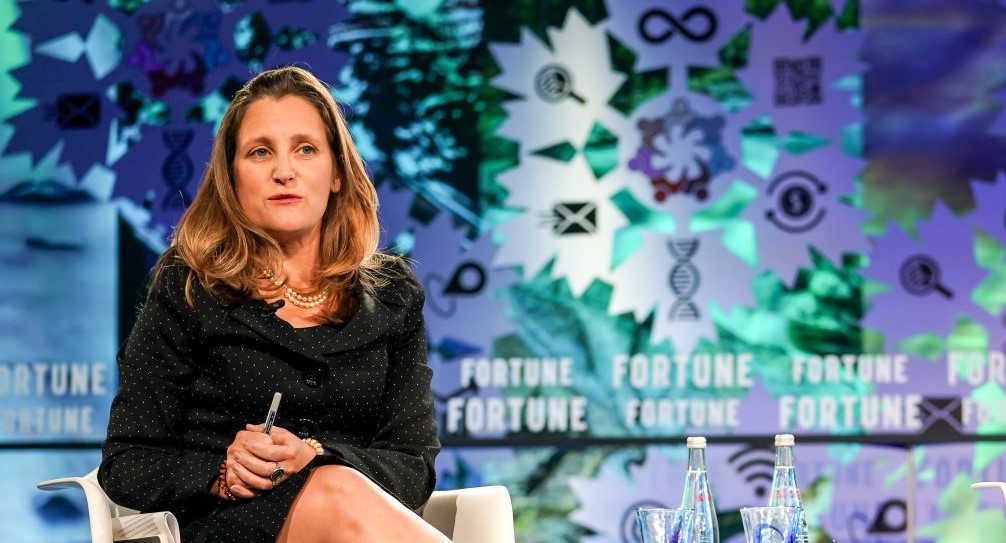
Op-ed: With a federal budget pending, do fiscal anchors still matter?
David Dodge, former governor of the Bank of Canada and deputy minister of finance, and Michael Horgan, former deputy minister of finance, are senior advisors with Bennett Jones.

Op-ed: Perception and reality across Canada’s urban-rural divide
Sean Speer is PPF's Prime Ministers of Canada Fellow, and Peter Loewen is a Professor in the Department of Political Science and the Munk School of Global Affairs & Public Policy.
Let’s build a better Canada together. Whether you’re looking to support our mission by becoming a member, partnering with us on a project or sponsoring an event, your engagement helps drive informed, inclusive policy across the country.

Redesigning CERB for a Partial Reopening of the Economy
The Canadian Emergency Response Benefit (CERB) has been a valuable asset to Canadians in light of the layoffs, cutbacks, and closures spurred by the COVID-19 pandemic. CERB and other government financial assistance programs facilitated public support for lockdown and social distancing and so income replacement programs were necessary to avoid societal suffering and to prevent the economy from free fall. While the functioning of this program was conducive to a time of an economic-induced coma, how will these benefits operate during a partial reopening? In this new report, Amin Mawani examines the restructuring of CERB during an economic partial re-opening.

A Policymaker’s Recovery Agenda for Higher Education
COVID-19 has exacerbated many issues across many sectors including Canada's higher education sector. With classes moving online and no clear end date, students face the challenge of education from home, some without skill or resource. In this article a number of esteemed authors compile an agenda from a policy perspective on what needs to be the focus and the funding priorities to ensure success in higher education and in turn, the Canadian workforce.

Protecting a People: The Six Nations Success in COVID-19 Prevention
The COVID-19 pandemic brought to light many forms of prevention and social distancing engagement across the globe. Through a balance of Western medicinal practices as well as practices regarding the traditional heritage of the Six Nations; Chief Mark Hill discusses the reserve's COVID-19 action plan and some enlightening news in a time of the pandemic.

More Lessons from World War II: What’s Next for the Government’s Finances
In this featured Policy Speaking article, PPF Fellow Drew Fagan examines government spending during World War II and the current COVID-19 crisis.
How to Build Canada’s Competitiveness
A challenge-driven industrial strategy can serve as a “north star” for Canadian policymakers during this period of significant technological and geopolitical change. The world is changing, and long-held policy assumptions in Canada need to adjust accordingly. PPF President & CEO Edward Greenspon invites you to read the New North Star II report and get engaged.
Rebuilding Work as We Know It: Flexibility, Child Care, and a Stronger Social Safety Net
The COVID-19 pandemic has shed light on pre-existing inequities in worker needs. Authors Shiva Mazrouei & Anjum Sultana explain that now is the time to re-imagine and reconstruct access to the labour market, enabling decent work for more Canadians.
Hodgson: What’s Required to Re-Open the Economy
As businesses and supply chains continue to cease operations to help stop the spread of COVID-19, the virus has resulted in a recession unlike any other in memory. As provinces and territories begin the conversation on re-opening the economy, in his first Policy Speaking blog, PPF fellow Glen Hodgson, lays out the key questions that will need to be addressed.
Bohunicky: Is This How Government Should Work in a Time of Crisis?
In times of crisis, the actions of government differ from normal times. PPF's Vice-President, Policy and former public servant Brian Bohunicky helps us reflect on some of the differences we are seeing and whether they should remain after the crisis.
Eisler: Is Vaclav Smil the Voice of Reason We All Need to Hear?
The world will eventually return to a post-pandemic reality where climate change will once again dominate the national and global agenda. In his first Policy Speaking blog, Dale Eisler, Senior Policy Fellow at the Johnson Shoyama Graduate School of Public Policy at the University of Regina summarizes renowned professor and author Vaclav Smil's latest article 'What we need to know about the pace of decarbonisation.”